 By Fabian Trueman
Queensland’s test and tag requirements make the business responsible for having its specified plug-in equipment inspected and tested by a competent person. Office-only equipment is due at least once every 5 years and service work equipment at least once a year, unless it’s connected to a safety switch. Those switches need their own tests, and failed items come out of use immediately. A licensed Gold Coast electrician can do the testing and tagging for you.
For Bundall offices, shops and cafés, the 1 September 2026 change is a prompt to check where you stand. T42 Electrical & Air Conditioning is a Gold Coast licensed electrical contractor (licence 83326), and the intervals above are set by the Electrical Safety Regulation 2026 (s 138). This guide covers what changed, who’s covered, intervals, safety switches, who can test, and tags and records.
What Changed in QLD Test and Tag Rules on 1 September 2026
Queensland’s test and tag regulations now sit in a new law. The Electrical Safety Regulation 2026 (s 2) commenced on 1 September 2026, replacing the 2013 Regulation but keeping its maximum intervals.
WorkSafe Queensland updated its testing and tagging guidance on the same day. It also states that the Regulation’s requirements take precedence over AS/NZS 3760, the Australian Standard for in-service safety inspection and testing. Where the two differ, the Regulation wins.
Older government and industry guides still quote the 2013 Regulation, whose section numbers no longer apply. In the new Regulation, the office and service rule sits in s 138 and safety switch testing in s 139. Check the date on anything you read, including your own compliance notes, because a page can carry the right intervals but cite the wrong law.
What matters day to day is which category of work your equipment falls into, because the intervals that follow all hang off it. A test and tagging schedule is built around that category, so start there.
Which Bundall Businesses the Test and Tag Requirements Cover
Does the power board under your desk count? Yes, and the Electrical Safety Regulation 2026 explains why through your type of work and how each item is used, with different rules for these groups:
- Office work. Administrative or professional work in a part of a workplace used as an office. It carries the longest interval.
- Service work. Work that involves providing a service and isn’t another listed work type. The Regulation’s examples include cleaning a motel, cooking in a restaurant, selling goods from a shop and caring for children at a child care centre.
- Construction and manufacturing. Under WorkSafe Queensland guidance, both run maximum intervals of 3 to 12 months, and construction equipment must also comply with AS/NZS 3012 (s 140).
- Hire equipment. Hiring out equipment has its own rule (s 142), covered under records below.
Under s 123, specified electrical equipment for office and service work includes cord extension sets and EPODs (power boards) rated at 20 A or less. Flexible cord-and-plug equipment at 20 A or less also counts, but only if it’s moved during its normal use. The duty sits with the person conducting the business or undertaking (PCBU) under s 138.
The Regulation’s own office example is a powerboard or extension lead supplying office equipment. Its service examples are a portable vacuum cleaner in a hotel and a hand-held blow dryer in a salon. A commercial electrician can sort your list item by item.
More: How to Safely Use a Power Board at Home
Test and Tag Intervals by Type of Work in Queensland
One row in this table shows your test and tag frequency in Queensland, meaning the longest your equipment can go between tests. Find your type of work and read across:
| Type of Work | Maximum Test Interval |
| Office work (if no safety switch) | 5 years |
| Service work (if no safety switch) | 12 months |
| Manufacturing, double insulated equipment | 12 months |
| Manufacturing, not double insulated | 6 months |
| Construction, transportable structures, fixed and transportable equipment and construction wiring | 6 months |
| Construction, all other equipment | 3 months |
| Hire equipment | 6 months, plus before each hire unless a non-removable safety switch is fitted |
Apart from the hire row, these test and tag intervals in QLD come from WorkSafe Queensland. Each is a maximum, so earlier testing is always allowed.
The hire row and the “no safety switch” wording both rest on the Electrical Safety Regulation 2026. Section 142 sets the hire rule, and under s 138(1)(b) office and service equipment connected to a safety switch needs no test cycle of its own. Find your row, check the date on your oldest tag, and book the next test before that interval runs out.
Safety Switch Testing Requirements for Gold Coast Workplaces
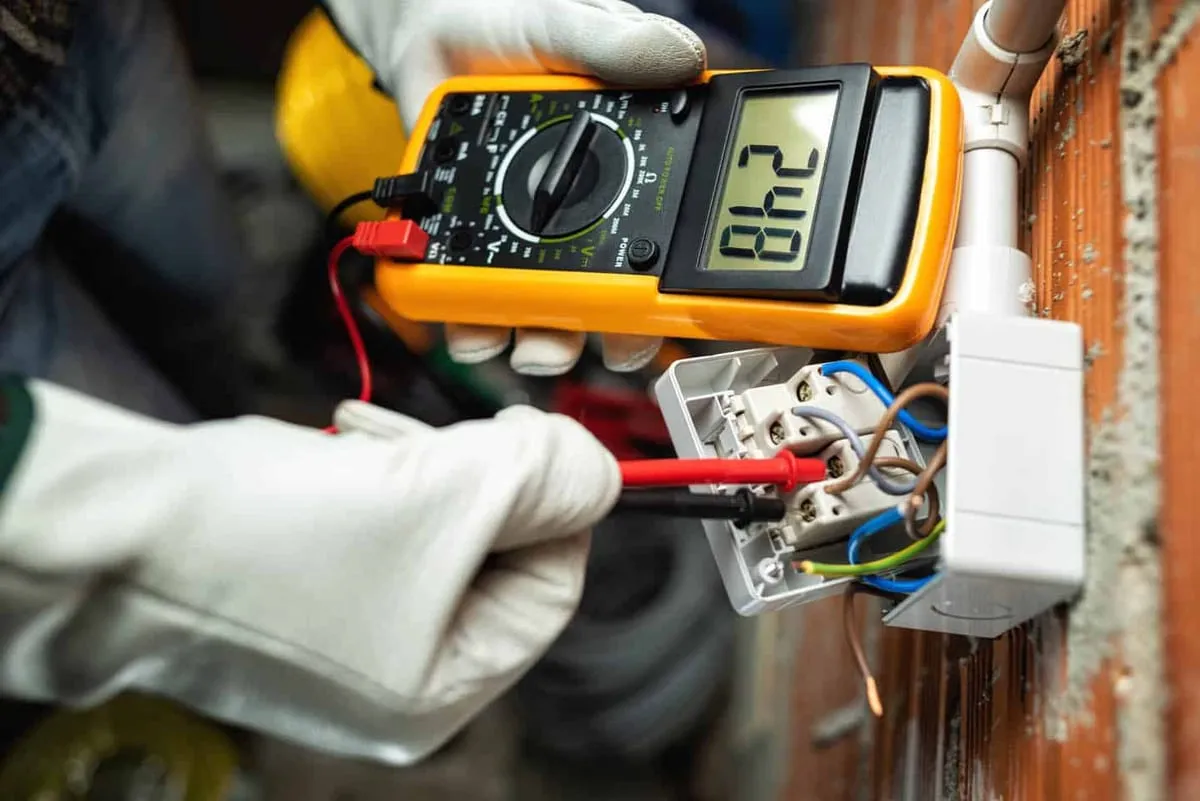
WorkSafe Queensland lists a 6-month push-button interval for a fixed office safety switch, but only a 2-year interval for its operating time test. Three points cover the rest of the testing:
Push-Button and Operating Time Tests
The same table puts portable office switches at 3 months (push-button) and 2 years (operating time). Other service work sits at 6 months and 2 years, and fixed construction switches at 1 month and 12 months. Each figure carries WorkSafe’s note that longer intervals may apply under AS/NZS 3760, now in its 2022 edition according to Standards Australia.
Type 1 and Type 2 Safety Switches
Under the Electrical Safety Regulation 2026 (s 123), a type 1 switch has a rated residual current of not more than 10 mA. A type 2 switch is rated at more than 10 mA but not more than 30 mA. Section 139 requires testing at the intervals stated in AS/NZS 3760, plus a push-button test on any portable switch immediately after it’s connected.
When a Safety Switch Replaces Routine Tagging
For office and service work, s 138(1)(b) lets equipment connected to a safety switch skip the routine test cycle. That makes safety switch installation a genuine alternative to tagging every item in scope, but the switch still needs its own tests under s 139. Let those lapse, and you’re left with equipment that’s neither tagged nor protected by a tested switch.
Who Can Test and Tag Electrical Equipment in QLD
Someone buys a tester online, a keen staff member starts tagging the office gear, and the business assumes it’s covered. That only holds if the right person does the work:
Competent Person, Appointed by the Employer
WorkSafe Queensland states that only a person appointed as competent by their employer can test and tag electrical equipment. Schedule 10 of the Electrical Safety Regulation 2026 defines a competent person by knowledge and skill for the task, gained through training, qualifications, experience or a combination. WorkSafe’s May 2023 testing and tagging update confirms the PCBU decides competence and names units such as UEERL0003 as minimum evidence.
Testing as a Business Needs a Contractor Licence
This is where the test and tag licence question in QLD comes in. The same update says PCBUs who perform testing and tagging work as part of a business or undertaking must hold an electrical contractor licence permitting that work. A restricted contractor licence endorsed only for testing and tagging doesn’t permit electrical repairs to equipment.
Repairs Are Licensed Electrical Work
WorkSafe also states it’s an offence under the Electrical Safety Act 2002 to repair electrical equipment without the appropriate electrical work licence. Our team works under electrical licence 83326, and you can read more about our licensed electricians. Send a damaged lead found during testing to a licensed electrician for electrical repairs, not back to whoever holds the tester.
Test and Tag Records and Failed Equipment for Bundall Businesses
One glance at a tag tells you whether it’s doing its job. Here’s what it must show, what happens to failed gear, and which records to keep:
- What the tag shows. WorkSafe Queensland guidance has the durable tag show the test date and the next scheduled test date. The Electrical Safety Regulation 2026 (s 123) sets a lower minimum: at least one of those dates, plus an identifier such as the tester’s name or licence number. It’s attached by the competent person who did the test (s 138(4)).
- Failed equipment. Anything that fails gets a warning tag and is immediately withdrawn from use (s 138(3)).
- Hire records. Hire businesses must keep records of the tests performed for at least 5 years (s 142(7)). Breaching the hire rules carries a maximum of 40 penalty units (s 142(8)).
- Keep a register. As good practice, list each item and its next due date. An electrical safety inspection is a sensible time to start one.
Miss a due date, and the business must keep that item out of office or service work until it’s retested or on a safety switch.
More: What Does an Electrical Safety Inspection Cover?
Conclusion
Test and tag requirements in QLD now come from the Electrical Safety Regulation 2026, in force since 1 September 2026. The business carries the duty, and a competent person tests its specified equipment within maximum intervals tied to the type of work.
WorkSafe Queensland puts office-only gear at up to 5 years between tests, and service workplaces such as shops and cafés at a year. A safety switch can replace that cycle, while construction and manufacturing run 3 to 12 months.
Those switches keep their own push-button and operating time schedules. Failed gear is pulled from use straight away, the employer decides who is competent, and testing as a business needs an electrical contractor licence.
Areas We Service
T42 Electrical & Air Conditioning tests and tags workplace equipment across the Gold Coast. Our local service pages include Bundall electrician, Southport electrician, Benowa electrician, Ashmore electrician, Molendinar electrician, Broadbeach electrician, Arundel electrician and Labrador electrician. The Regulation applies across Queensland, so the intervals in this guide hold in each of these suburbs, whether you run an office, a shop or a café.
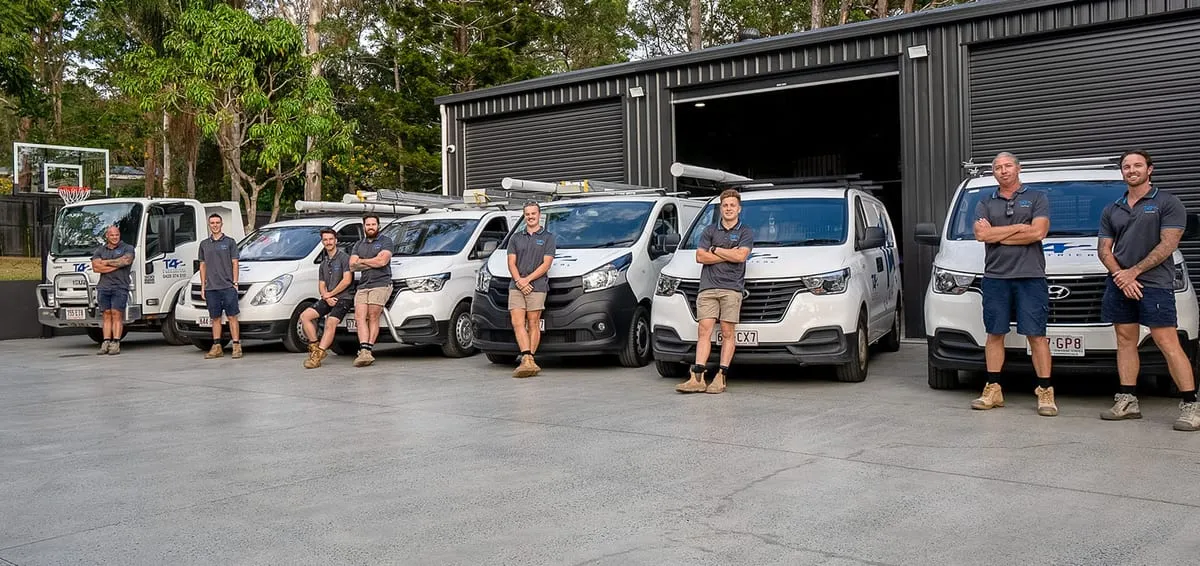
Book Test and Tagging for Your Bundall Business Today
Not sure which row of the table your business sits in, or are some tags already past their next test date? Checking your oldest tags and your safety switches is the fastest way to know where you stand. Call T42 Electrical & Air Conditioning on 0428 374 510 or book online to get your equipment tested, tagged and back on a schedule you can track:
- Licensed electrical contractor holding electrical licence 83326
- Accredited Master Electricians
- No-obligation quotes before any testing starts
- 300+ five-star reviews
Frequently Asked Questions About Test and Tag Requirements in QLD
Quick answers on electrical test and tag in QLD, from safety switches to who can do the testing, for business owners checking their obligations:
Is test and tag a legal requirement in Queensland?
Yes, for specified equipment in covered work such as office, service and manufacturing work, and construction equipment must meet AS/NZS 3012. Office and service equipment can instead connect to a safety switch.
How often does office equipment need to be tested and tagged in QLD?
At least once every 5 years for specified equipment used only for office work, unless it’s connected to a safety switch. Equipment also used for service work needs testing at least once a year.
Do I need to test and tag if my equipment is plugged into a safety switch?
Not for office and service work, where connection to a safety switch is an alternative to routine testing under s 138. The switch itself still needs testing at the intervals stated in AS/NZS 3760.
Who can test and tag in Queensland?
Only a person the employer has appointed as competent, through training, qualifications or experience. WorkSafe adds that businesses performing testing and tagging work need an electrical contractor licence permitting it.
What happens if equipment fails a test and tag?
It must be tagged to warn people not to use it and immediately withdrawn from use. Repairs are licensed electrical work, so a licensed electrician fixes it or the item is replaced.
How often should workplace safety switches be tested?
For fixed office switches, WorkSafe Queensland lists a 6-month push-button test and a 2-year operating time test. Other switches and work types differ, and AS/NZS 3760 may allow longer intervals.
Written by
Fabian Trueman
Founder of T42 Electrical & Air Conditioning, leading a team of accredited master electricians with over 25 years of experience.