 By Fabian Trueman
A smoke alarm that keeps going off is usually triggered by dust inside the sensor, cooking steam, humidity, a low battery, or an expired unit past its 10-year lifespan. Ionisation alarms falsely alarm far more than photoelectric alarms, which is why Queensland now requires photoelectric only. If cleaning and a new battery don't stop it, a licensed Gold Coast electrician can test or replace the alarm.
If you have ruled out actual smoke or fire, the cause is almost always one of five common issues. T42 Electrical & Air Conditioning installs, replaces, and troubleshoots smoke alarms across the Gold Coast every week. This guide helps you identify the cause and fix it.
Chirping vs Sirening: Two Different Problems
A chirp every 30 to 60 seconds means something completely different from a continuous siren. Recognising which sound your alarm is making is the first step:
What Chirping Means
A single beep every 30 to 60 seconds almost always indicates a low battery or an expired alarm. This is not a fire warning. Replace the battery first, and if chirping continues, check the manufacturer’s date on the back because units older than 10 years need replacing.
What Continuous Sirening Means
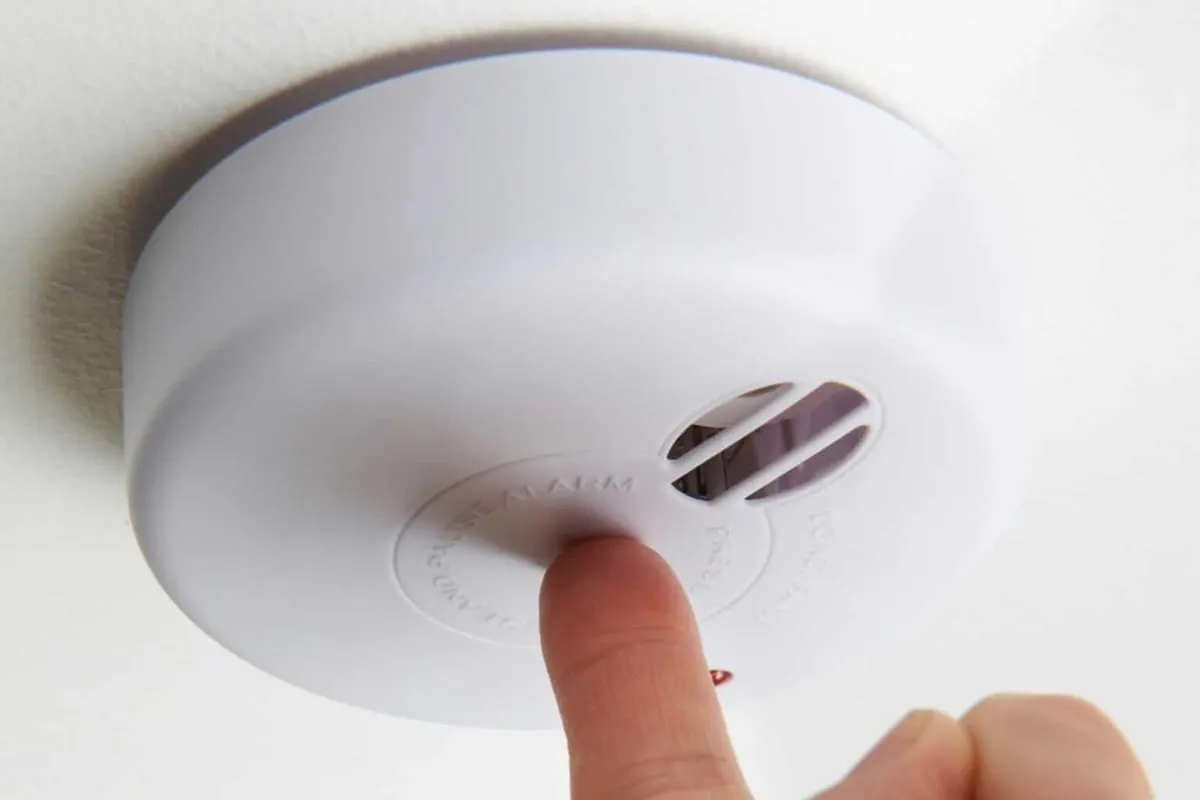
A continuous siren means the sensor has detected particles it interprets as smoke. If there is no smoke or fire, the alarm is false-triggering from steam, dust, insects, or humidity. Press the hush button and monitor whether the siren returns.
What Intermittent Short Beeps Mean
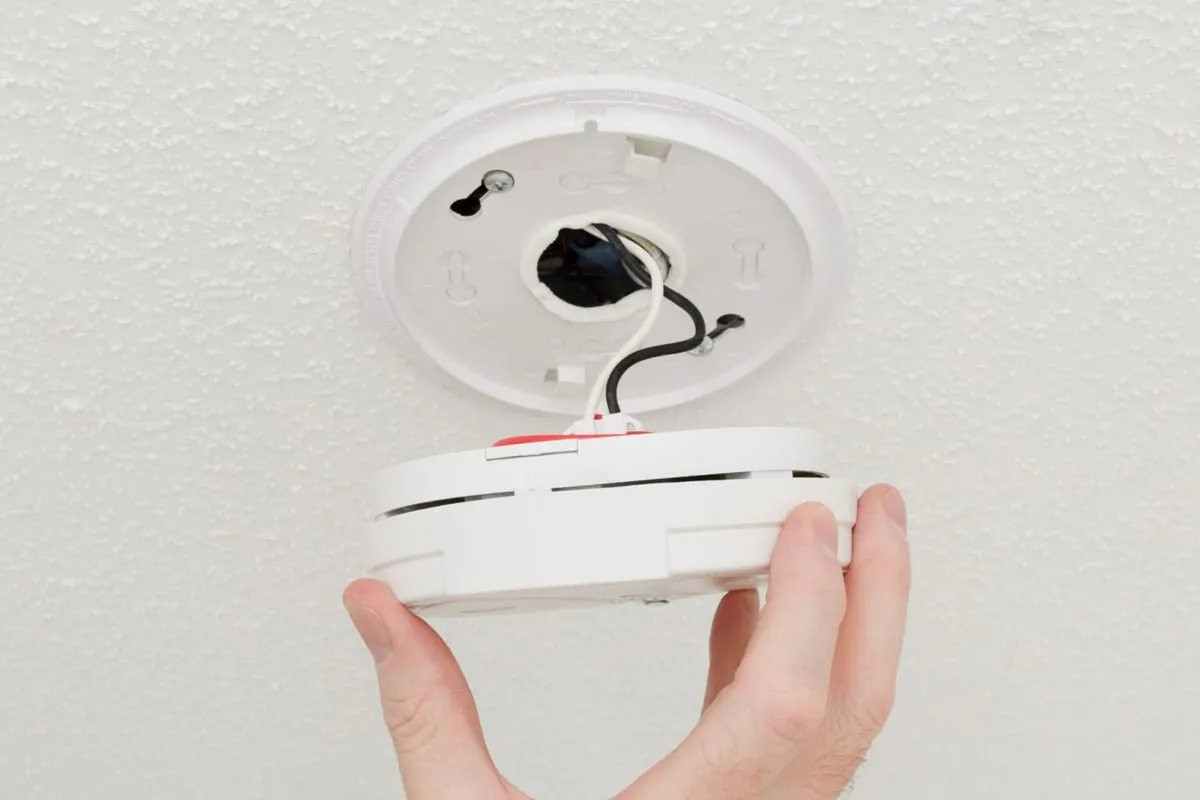
Multiple beeps in a pattern, such as three beeps then a pause, often indicate a fault code specific to the manufacturer. Hardwired interconnected alarms may also chirp when they lose connection to another alarm in the network. Check the manual or call a licensed electrician if the alarm is hardwired.
Common Causes of False Alarms
Most false alarms have straightforward causes. These are the triggers I encounter most often on Gold Coast callouts:
Dust and Debris Inside the Sensor
Dust accumulates inside the sensor chamber over time and eventually becomes dense enough to trigger the alarm. This is the most common cause of false alarms in Gold Coast homes where ceiling fans circulate dust constantly. Vacuuming the alarm vents with a soft brush attachment every six months prevents this.
Cooking Steam and Smoke
Steam from cooking rises to the ceiling and enters the sensor, where the alarm cannot tell it apart from real smoke. Open-plan homes in Coomera, Upper Coomera, and Pimpama are especially prone because the kitchen sits directly below a hallway alarm. Relocating the alarm or upgrading to a photoelectric model usually solves this.
High Humidity and Bathroom Steam
Hot showers produce steam that behaves exactly like smoke particles inside a sensor. Alarms near bathroom doors or in adjacent hallways are the most affected. Improving ventilation and placing the alarm at least three metres from the bathroom door reduces false triggers.
Insects Inside the Alarm Housing
Small insects, especially spiders, crawl into the housing and build webs that interfere with the detection beam. This peaks during warmer months across the Gold Coast when insect activity increases. Cleaning with compressed air and sealing gaps around the housing prevents it.
Low or Failing Battery
As a battery weakens, voltage fluctuations can trigger the low-battery chirp or cause a brief false siren. This is most common at night because cooler temperatures cause battery voltage to drop slightly. Replacing batteries annually, even before the alarm chirps, prevents night-time activations.
Expired Alarm Past Its 10-Year Lifespan
Smoke alarm sensors degrade over time and become unreliable after roughly 10 years. An expired alarm false-triggers more frequently because the sensor can no longer accurately distinguish smoke from harmless particles. Check the date on the back and replace any unit older than 10 years.
Why Your Alarm Type Matters
The type of smoke alarm in your home directly affects how often it falsely alarms. This is the key insight most homeowners miss:
Why Ionisation Alarms False-Alarm More
Ionisation alarms use radioactive material to create an electrical current between two plates. Any fine particles, including cooking steam, aerosol spray, and humidity, disrupt this current and trigger the alarm. This extreme sensitivity to non-smoke particles is why Queensland has phased them out.
Why Photoelectric Alarms Are More Reliable
Photoelectric alarms use a light beam and a sensor inside the detection chamber. Only larger smoke particles from a smouldering fire scatter the beam enough to trigger it. Steam, cooking fumes, and aerosol sprays rarely cause false alarms in photoelectric units.
Queensland’s Shift to Photoelectric Only
Queensland legislation now requires all domestic smoke alarms to be photoelectric, complying with AS 3786. The Queensland Fire Department requires all existing homes to have interconnected photoelectric alarms by 1 January 2027. If your ionisation alarms keep false-alarming, they need replacing with compliant units regardless.
More: Signs Your Home Is at Risk of an Electrical Fire
How to Diagnose Your Specific Problem
Different alarm behaviours point to different causes. This table helps you identify what is triggering yours:
| What Your Alarm Does | Most Likely Cause | What to Do |
| Chirps once every 30 to 60 seconds | Low battery or expired alarm | Replace the battery. If chirping continues, replace the alarm |
| Continuous siren when cooking | Steam or cooking fumes reaching the sensor | Relocate the alarm or upgrade to photoelectric |
| Continuous siren with no smoke present | Dust, insects, or humidity inside the sensor | Clean with a vacuum or compressed air. Reset with the test button |
| Goes off at night for no reason | Temperature drop is causing battery voltage fluctuation | Replace the battery with a fresh, high-quality unit |
| One alarm triggers all alarms | An interconnected system responding to one triggered alarm | Find and troubleshoot the initiating alarm only |
| Chirps in a pattern (e.g. 3 beeps, pause) | Manufacturer fault code or interconnection error | Check the manual for code meaning or call an electrician |
| The alarm goes off, then stops by itself | Brief environmental trigger that dissipated | Clean the alarm. Monitor for repeat activations |
If your alarm continues to falsely trigger after cleaning, battery replacement, and relocation, the unit is likely faulty or expired.
Hardwired Smoke Alarm Issues
Hardwired alarms connected to the mains have additional causes that battery-only alarms do not. These require a licensed electrician:
Power Supply Fluctuations
Voltage fluctuations on the mains circuit can cause the sensor to receive inconsistent power and false triggers. Loose connections at the switchboard or corroded wiring are common causes. A licensed electrician can test the circuit and ensure a stable supply.
Interconnection Wiring Faults
In a hardwired system, all alarms share a signal wire, so they all sound when one detects smoke. A fault on this wire, such as a loose connection or moisture ingress, can trigger false activations across the entire system. Professional electrical fault finding isolates which section is causing the problem.
Incorrect Alarm Installation
A hardwired alarm on the wrong circuit, wired with incorrect polarity, or not secured to its base plate, can behave erratically. Installation errors are common when alarms are fitted by unlicensed workers. Under Queensland law, hardwired smoke alarm installation must be done by a licensed electrician.
Queensland Smoke Alarm Laws You Need to Know
Queensland has some of the strictest smoke alarm legislation in Australia. Upgrading may solve your false alarm problem and meet your legal obligations:
The 2027 Deadline for All Homes
By 1 January 2027, all Queensland homes must have interconnected photoelectric smoke alarms in every bedroom, in hallways connecting bedrooms, and on every level. This applies to owner-occupied homes, not just rentals. If your home still has old ionisation or standalone battery alarms, the deadline is approaching.
What Interconnected Means
Interconnected alarms are linked so that when one detects smoke, every alarm in the home sounds simultaneously. This ensures occupants at the far end of the house hear the alarm even if the fire starts elsewhere. The Queensland Fire Department recommends professional installation for interconnected systems.
Why Upgrading Stops False Alarms
Replacing old ionisation alarms with modern photoelectric units eliminates the most common cause of cooking and steam-related false alarms. Modern units also include hush buttons, sealed 10-year lithium batteries, and improved sensor algorithms. A professional smoke alarm installation ensures correct placement and full compliance.
Why Gold Coast Homes Get More False Alarms
Several factors specific to the Gold Coast make false alarms more common here:
Subtropical Humidity Year-Round
The Gold Coast’s high humidity, especially from November through March, creates persistent moisture that enters smoke alarm sensors. Low-lying suburbs and homes near waterways experience higher indoor humidity. Adequate ventilation and correct alarm placement reduce humidity-triggered activations.
Open-Plan Living in Newer Suburbs
Homes in Coomera, Upper Coomera, Pimpama, and Pacific Pines feature open-plan layouts where cooking steam reaches hallway alarms with nothing to diffuse it. The absence of walls between the kitchen and the alarm makes false triggers almost inevitable with ionisation alarms. A photoelectric alarm with a hush button is the practical solution.
Insect Activity in Warmer Months
Gold Coast homes in Robina, Mudgeeraba, Varsity Lakes, and Elanora see increased insect activity from September through April. Spiders and small bugs enter the alarm housings and trigger the sensor beam. Cleaning every six months keeps sensors clear.
Older Ionisation Alarms Still in Place
Many homes in Nerang, Ashmore, Southport, and Carrara still have original ionisation alarms from the 1990s and 2000s. These alarms are both expired and the wrong type under current legislation. Replacing them with photoelectric alarms solves false alarms and meets the 2027 deadline.
After installing smoke alarms for a Gold Coast homeowner, the team received this feedback:
“Lewis and Jax were communicative, prompt and professional and very pleasant to deal with. Their work is immaculate. Highly recommend! Thank you, guys.” Katey Everett
How to Stop Your Smoke Alarm from Going Off
Before calling an electrician, try these steps:
Clean the Alarm
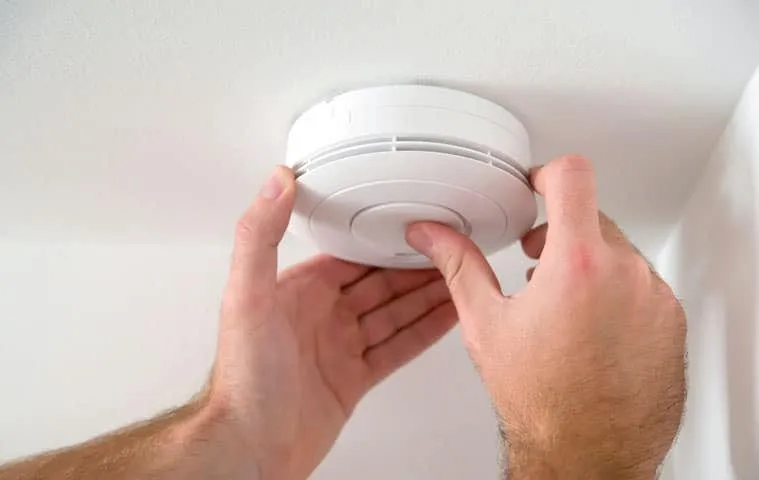
Use a vacuum with a soft brush attachment to gently clean the vents and outer housing. Hold the alarm steady and vacuum around all openings to remove dust, cobwebs, and debris. This single step resolves the majority of false alarm problems.
Replace the Battery
Remove the old battery and insert a fresh one as specified in the manual. Hold the test button for 10 seconds after inserting the new battery to reset the alarm. If the alarm uses a sealed 10-year lithium battery, the entire unit needs to be replaced instead.
Check the Manufacture Date
Turn the alarm over and look for the date printed on the back or inside the battery compartment. Replace any alarm older than 10 years, regardless of whether it seems to be working. Our family-owned team of accredited master electricians can supply and install compliant replacements.
Relocate the Alarm if Needed
If your alarm sits directly outside the kitchen or bathroom and keeps triggering from steam, move it at least three metres further along the hallway. It must still comply with Queensland placement requirements. Check the Queensland Fire Department guidelines or ask a licensed electrician for compliant placement advice.
More: Why Does My House Smell Like Burning Plastic?
Areas We Service
T42 Electrical & Air Conditioning services homes across the Gold Coast, including Southport, Nerang, Ashmore, Carrara, Robina, Mudgeeraba, Burleigh Heads, Burleigh Waters, Palm Beach, Mermaid Waters, Coomera, Upper Coomera, Pimpama, Pacific Pines, Elanora, Currumbin, Varsity Lakes, Worongary, Helensvale, Broadbeach, and surrounding suburbs.

Get Your Smoke Alarms Sorted Before 2027
If your smoke alarm keeps going off and you are tired of false alarms, call T42 Electrical & Air Conditioning on 0428 374 510. We provide same-day service, no-obligation quotes, and a lifetime workmanship warranty on every job. With 300+ five-star reviews and 25+ years of experience, we install, replace, and troubleshoot smoke alarms across the Gold Coast every day.
Frequently Asked Questions
Why does my smoke alarm keep going off for no reason?
The most common causes are dust inside the sensor, cooking steam, humidity, a low battery, or an expired alarm. Ionisation alarms falsely alarm far more than photoelectric alarms. Clean the alarm, replace the battery, and check the manufacturer’s date.
Why does my smoke alarm go off at night?
Cooler overnight temperatures cause battery voltage to drop, crossing the alarm’s warning threshold. This is most common with older batteries or alarms approaching the end of life. Replacing the battery with a fresh unit usually stops nighttime activations.
Can dust set off a smoke alarm?
Yes. Dust accumulates inside the sensor chamber and can scatter the light beam in a photoelectric alarm or disrupt the current in an ionisation alarm. Vacuuming the alarm vents every six months prevents this.
Are ionisation smoke alarms still legal in Queensland?
Ionisation alarms are being phased out under Queensland legislation. All homes must have photoelectric alarms complying with AS 3786 by 1 January 2027. If your home still has ionisation alarms, they must be replaced.
Why does my hardwired smoke alarm keep going off?
Hardwired alarms can falsely trigger from the same causes as battery alarms, plus power supply fluctuations, interconnection wiring faults, and incorrect installation. These electrical causes require a licensed electrician. Do not disconnect a hardwired alarm yourself.
How often should smoke alarms be replaced?
All smoke alarms should be replaced every 10 years, regardless of condition. The manufacture date is printed on the back. After 10 years, the sensor degrades and becomes either oversensitive or unresponsive.
Written by
Fabian Trueman
Founder of T42 Electrical & Air Conditioning, leading a team of accredited master electricians with over 25 years of experience.