 By Fabian Trueman
Outdoor lights trip after heavy rain when water enters fittings, cables, joints, switches, or garden lighting circuits, causing current leakage. A safety switch trips to cut power and reduce the risk of electric shock, so repeated tripping should be treated as a real fault. If it keeps happening, have the circuit tested by a licensed local electrician.
Coastal rain, garden irrigation, salt air, and ageing outdoor fittings can quickly expose small defects. T42 Electrical & Air Conditioning helps Gold Coast homes find these faults safely. This guide covers common causes, safe checks, local risks, repairs, prevention, and when to call.
What Does It Mean When Outdoor Lights Trip?
Outdoor lights that trip after heavy rain are usually telling you that water has reached an electrical part that should stay dry:
A safety switch may be detecting leakage
A safety switch trips when it detects current leaking from the intended circuit path. The Electrical Safety Office says safety switches turn off power within milliseconds when current leakage is detected. If your outdoor lights trip after rain, the system is warning you before someone gets hurt.
It is different from a blown globe
A blown globe usually stops one light from working, while a tripping circuit cuts power to a wider section. You may lose garden, security, patio, or outdoor power lights on the same circuit. That pattern points to an issue with wiring, fittings, moisture, or protection.
Repeated tripping should not be ignored
Nuisance tripping may seem minor, but the Electrical Safety Office says regular tripping can indicate overloaded circuits, faulty equipment, or damaged wiring. This matters more outdoors because rain, wet soil, and metal fittings increase risk. Leave the circuit off until the cause is checked.
What Should You Do First After Heavy Rain?
After heavy rain, your first job is to keep people away from wet outdoor electrical areas and avoid resetting the circuit repeatedly:
Keep clear of wet fittings
Do not touch outdoor lights, metal posts, garden spikes, pool fencing, or wet switch plates after a trip. Water can make small faults more dangerous because electricity travels more easily through wet surfaces. Keep children, pets, and visitors away from the area until it is checked.
Do not keep resetting the switch
Resetting a safety switch repeatedly can re-energise a wet fault. If it trips straight away or trips again when the lights turn on, leave it off. A Gold Coast electrical team can test the circuit without guessing.
Check only from a safe distance
You can safely note which lights were on, when the rain started, and whether the fault happens at night only. Do not open fittings, remove covers, or unplug outdoor connections in the rain. Those details help a licensed electrician start the fault-finding process faster.
Why Do Burleigh Outdoor Lights Trip After Heavy Rain?
Outdoor lights in Burleigh usually trip after rain because moisture finds weak points in outdoor fittings, cable joins, sensors, or buried garden circuits:
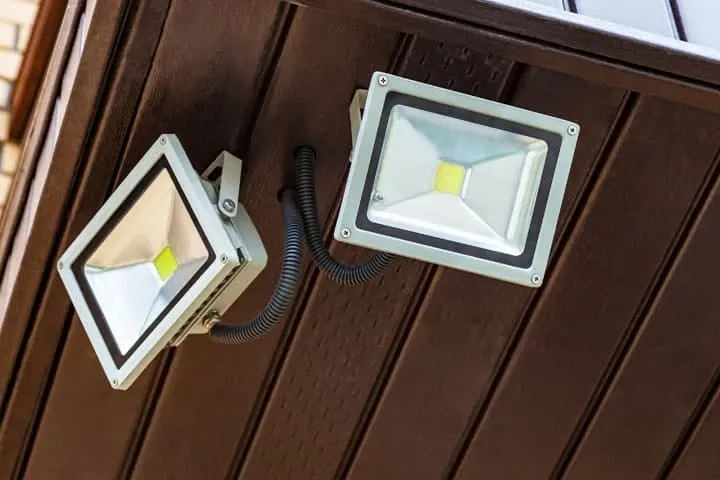
Water inside light fittings
Outdoor fittings can let water in when seals shrink, screws loosen, or covers crack in the sun. Once water reaches the terminals, the safety switch may detect leakage and trip. This is common in older Burleigh Heads homes with exposed coastal lighting.
Failed junction boxes
A junction box protects cable joins, but it must be suitable for outdoor conditions and installed correctly. If the lid seal fails or the box sits in a spot where water pools, moisture can enter and trip the circuit. Garden beds in Burleigh Waters often hide these faults until heavy rain arrives.
Damaged underground cable
Buried lighting cable can be damaged by gardening, edging, soil movement, tree roots, or poor installation depth. The fault may only appear when wet soil creates a conductive path. If garden lights trip after rain, electrical fault finding can isolate the damaged section.
Faulty sensor lights
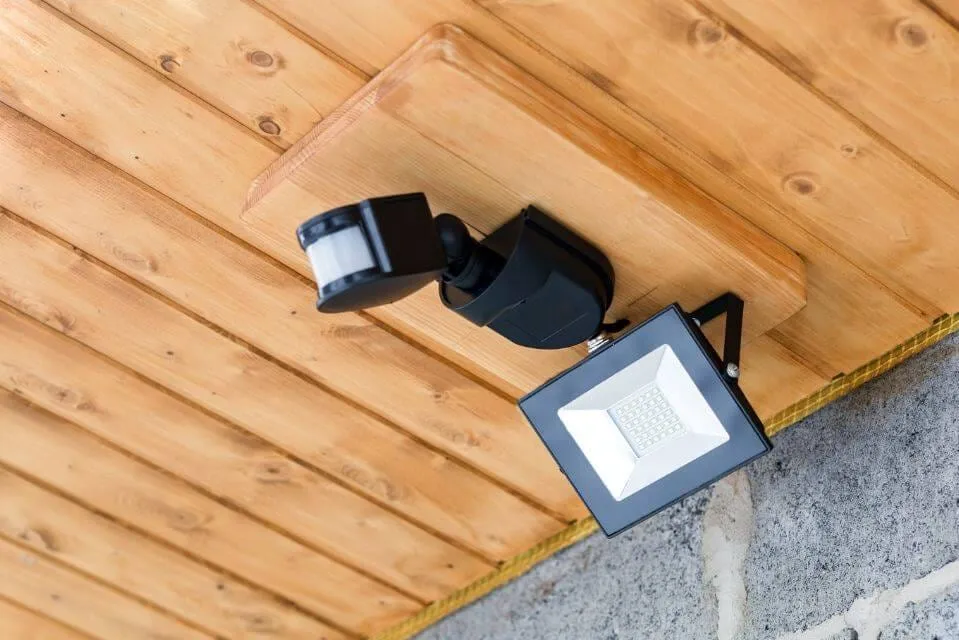
Motion sensors and daylight sensors sit outside in heat, humidity, wind, and salt air. Water inside the sensor head can trip the circuit when the light tries to switch on. A safer fix may involve replacing the sensor or upgrading to proper security lighting.
How Can You Tell Which Outdoor Light Is the Problem?
You can narrow down the likely fault by looking at the tripping pattern, but you should not dismantle wet outdoor fittings yourself:
Use the timing as a clue
If the circuit trips as soon as rain starts, water may quickly be entering a fitting or cable joint. If it trips hours later, moisture may be slowly soaking into a buried cable or junction box. If it only trips at night, a sensor, timer, or lighting controller may be involved.
Compare what stopped working
Outdoor lighting circuits often share power with patios, garden lights, security lights, or outdoor power points. Write down which areas stopped working, such as the front path, pool zone, driveway, or alfresco area. This helps a residential electrician trace the circuit safely.
Use this diagnosis table
This table helps describe the symptoms before a technician arrives. It does not replace electrical testing because water-related faults can move as fittings dry out. Leave the circuit off if the trip repeats.
| What Happens | Likely Cause | Safe Next Step |
| Trips as soon as rain starts | Water entering a fitting or junction box | Leave off and book testing |
| Trips only at night | Sensor, timer, or light fitting fault | Note which lights switch on |
| Trips after hours of rain | Moisture in buried cable or conduit | Avoid garden lighting areas |
| Trips near pool or garden beds | Water, soil movement, or damaged cable | Keep clear of wet ground |
| Trips after wind and rain | Loose fitting, cracked cover, or damaged seal | Do not touch the light |
| Trips even when lights are off | Circuit, switch, cable, or switchboard fault | Arrange urgent fault finding |
Why Are Burleigh Homes More Prone to Rain Faults?
Burleigh homes face rain, salt air, outdoor living spaces, garden lighting, and older electrical upgrades that can expose weak outdoor circuits:
Coastal homes face salt and wind
Homes near Burleigh Heads and Palm Beach deal with salt air, wind-driven rain, and outdoor fittings exposed to weather. Salt can speed up corrosion around screws, terminals, brackets, and sensor heads. Once corrosion opens a path for moisture, tripping often follows.
Canal and low-lying homes stay damp longer
Properties around Burleigh Waters and Mermaid Waters can have damp soil and irrigated gardens for longer after rain. Garden lighting cable and junction points may sit in wet ground for days. That lingering moisture makes minor installation defects easier to detect.
Hinterland edges see heavier runoff
Homes toward Mudgeeraba, Tallai, and Tallebudgera can see stronger runoff across sloped blocks. Water can move through garden beds, retaining walls, and conduits faster than expected. Outdoor lighting needs cable routes that handle those conditions.
Summer rain adds pressure
The Bureau of Meteorology Gold Coast Seaway data shows higher mean rainfall in summer months, including January, February, and March. That lines up with the period when outdoor lighting faults often appear. If a circuit trips each wet season, the problem is unlikely to disappear permanently.
What Will an Electrician Actually Test?
A licensed electrician will test the lighting circuit, switchboard protection, cable insulation, fittings, sensors, and outdoor joins to find the exact fault:
Switchboard and safety switch checks
The first step is identifying which safety switch or circuit breaker is tripping. The electrician checks labels, load grouping, safety switch operation, and proper protection of lighting circuits. If protection is missing or outdated, switchboard upgrades may be recommended.
Insulation resistance testing
In over 25 years of Gold Coast electrical work, I’ve found insulation testing is one of the fastest ways to find wet outdoor lighting faults. The test checks whether current is escaping through damaged insulation or moisture-contaminated parts. Results guide the next step instead of relying on trial and error.
Fitting and junction inspection
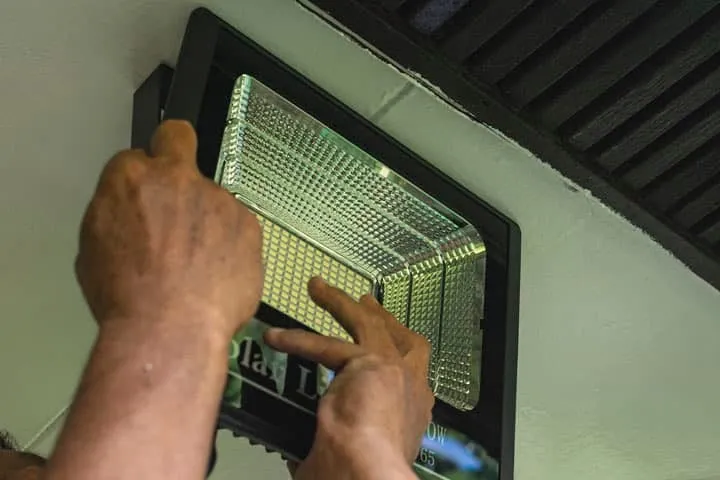
The electrician checks each fitting, sensor, conduit entry, junction box, and cable gland for water marks, corrosion, cracks, or poor sealing. Outdoor lights may look fine from below while the back plate is full of moisture. Faulty parts can then be repaired, replaced, or isolated.
Clear repair options
Once the cause is found, you should understand whether the problem is a fitting, sensor, buried cable, switch, or switchboard issue. A good technician explains the safe repair path before starting work. You get a diagnosis and a fixed-price quote before any work begins.
How Do You Fix Outdoor Lights That Trip?
The correct fix depends on whether the fault is in the fitting, cable, sensor, switchboard, or installation design:
Replace water-damaged fittings
If water has entered a fitting, replacing the seal alone may not be enough. Corroded terminals, burnt insulation, and contaminated parts can cause the light to keep tripping after it dries. A proper garden and outdoor light installation uses weather-suitable fittings and better placement.
Repair damaged wiring
Damaged outdoor wiring should be isolated, repaired, or replaced by a licensed electrician. Underground joins, cracked conduit, and cable nicks can be hard to see without testing. These repairs are part of safe electrical repairs for outdoor circuits.
Upgrade poor sensor lights
Cheap sensor lights often fail early in exposed locations because the sensor head and cable entries are constantly exposed to the weather. A higher-quality fitting with proper mounting can reduce false alarms and improve security. This is worth considering for driveways, side paths, bin areas, and rear doors.
Improve surge and storm protection
Storms can add lightning-related surges, water ingress, and power fluctuations to the same outdoor circuit. Energex says lightning strikes can cause surges through powerlines and into homes or businesses. Installing a surge protector can help protect sensitive electrical equipment.
More: Why Is My Outdoor Power Point Not Working
How Can You Prevent Rain-Related Lightning Trips?
You can reduce repeat tripping by choosing weather-suitable fittings, keeping garden circuits maintained, and booking checks before storm season:
Use weatherproof outdoor connections
The Electrical Safety Office advises that outdoor electrical connections should be weatherproof. It also recommends extra-low voltage outside, such as LED or solar lights, where suitable. For permanent lighting, ask for fittings and connections designed for outdoor exposure.
More: How to Safely Install Outdoor Lighting
Keep garden beds away from fittings
Mulch, soil, leaves, and irrigation can cover junction boxes, cable routes, and garden spike lights. That traps moisture around electrical parts and makes faults harder to find. Keep fittings visible, raised, and clear enough for inspection.
Schedule checks before wet season
Book outdoor lighting checks before summer storms if your lights have tripped in past wet weather. The family-owned team can test safety switches, inspect fittings, and check exposed outdoor circuits. Early testing is usually calmer than waiting until the lights fail during heavy rain.
More: Why Does My Safety Switch Keep Tripping
Insert the customer review here
Customer review pending. “[Insert the supplied T42 Electrical & Air Conditioning review about outdoor lights, safety switches, electrical fault finding, or rain-related electrical repairs here.]” [Reviewer Name](Review URL). That kind of clear service proof helps homeowners feel confident when wet-weather electrical faults need proper testing.
When Should You Call for Urgent Electrical Help?
You should call for urgent electrical help when outdoor lights trip repeatedly, water is near fittings, or the circuit affects safety, security, or access:
Call if the switch will not stay on
If the safety switch trips every time you reset it, leave it off. The Electrical Safety Office says safety switches protect against current leakage, but they only help when connected to the faulty circuit and working properly. A repeated trip means the fault still needs to be found.
Call if water reached electrical parts
Energex warns that wet appliances, wiring, or switchboards can cause life-threatening electric shocks. Outdoor lights, garden circuits, and patio fittings can also become unsafe after heavy rain or flooding. Keep away from wet electrical areas until they are inspected.
Call if security or access lights fail
Driveway, pathway, stairs, and entry lights are safety features, not just decoration. If they fail after rain, your home may be darker and harder to access safely. A local emergency electrician can help restore safe lighting when timing matters.
More: Power Outage Safety Tips
Areas We Service
Our electricians service outdoor lighting jobs across the Gold Coast, including Arundel, Hope Island, Coomera, Upper Coomera, Pimpama, Oxenford, Pacific Pines, Helensvale, Southport, Benowa, Bundall, Carrara, Nerang, Robina, Varsity Lakes, Mudgeeraba, Burleigh Heads, Burleigh Waters, Broadbeach, Broadbeach Waters, Mermaid Waters, Miami, Palm Beach, Currumbin, Currumbin Waters, Elanora, Worongary, and nearby suburbs. Whether your outdoor lights are set up beside the pool, driveway, garden path, or alfresco area, the circuit needs proper testing. T42 Electrical & Air Conditioning helps local homes find and fix the cause safely.

Get Your Burleigh Outdoor Lights Fixed
Call T42 Electrical & Air Conditioning on 0428 374 510 or book your job online for outdoor lighting fault finding, repairs, and safety checks. We can inspect fittings, sensors, garden circuits, switchboards, and wet-weather faults before the next storm. Expect same-day service, clear pricing before work starts, 300+ five-star reviews, 25+ years of experience, and a guarantee of quality workmanship.
Frequently Asked Questions
These quick answers cover the most common questions about outdoor lights tripping after heavy rain in Burleigh homes:
Why do my outdoor lights trip when it rains?
Outdoor lights usually trip in rain because water has entered a fitting, junction box, cable join, switch, or sensor. The safety switch detects current leakage and cuts power. Leave the circuit off if it keeps tripping.
Is it safe to reset a tripped outdoor lighting circuit?
It may be safe once, but repeated resetting is not recommended. If the switch trips again, the fault is still present and may involve water or damaged wiring. Leave it off and call a licensed electrician.
Can garden lights trip a safety switch?
Yes, garden lights can trip a safety switch when water enters fittings, underground joins, damaged cable, or low-quality connectors. Wet soil can make leakage easier to detect. Outdoor garden lighting should be tested properly before use.
Why do my sensor lights trip after storms?
Sensor lights can trip after storms when water enters the sensor head, cable entry, or fitting body. Wind can also loosen covers or push rain behind fittings. Replacing the sensor or upgrading the fitting may solve the issue.
Do outdoor lights need a safety switch?
Outdoor lighting circuits should have suitable protection because they are exposed to weather, moisture, and touchable surfaces. The Electrical Safety Office recommends safety switches on all circuits. Ask an electrician to check whether your lighting circuit is protected.
Should I replace old outdoor lights before storm season?
Yes, replacing cracked, corroded, or poorly sealed outdoor lights before storm season can prevent repeat tripping. Older fittings often fail once heavy rain arrives. A pre-season inspection can find weak points before they become urgent faults.
Written by
Fabian Trueman
Founder of T42 Electrical & Air Conditioning, leading a team of accredited master electricians with over 25 years of experience.